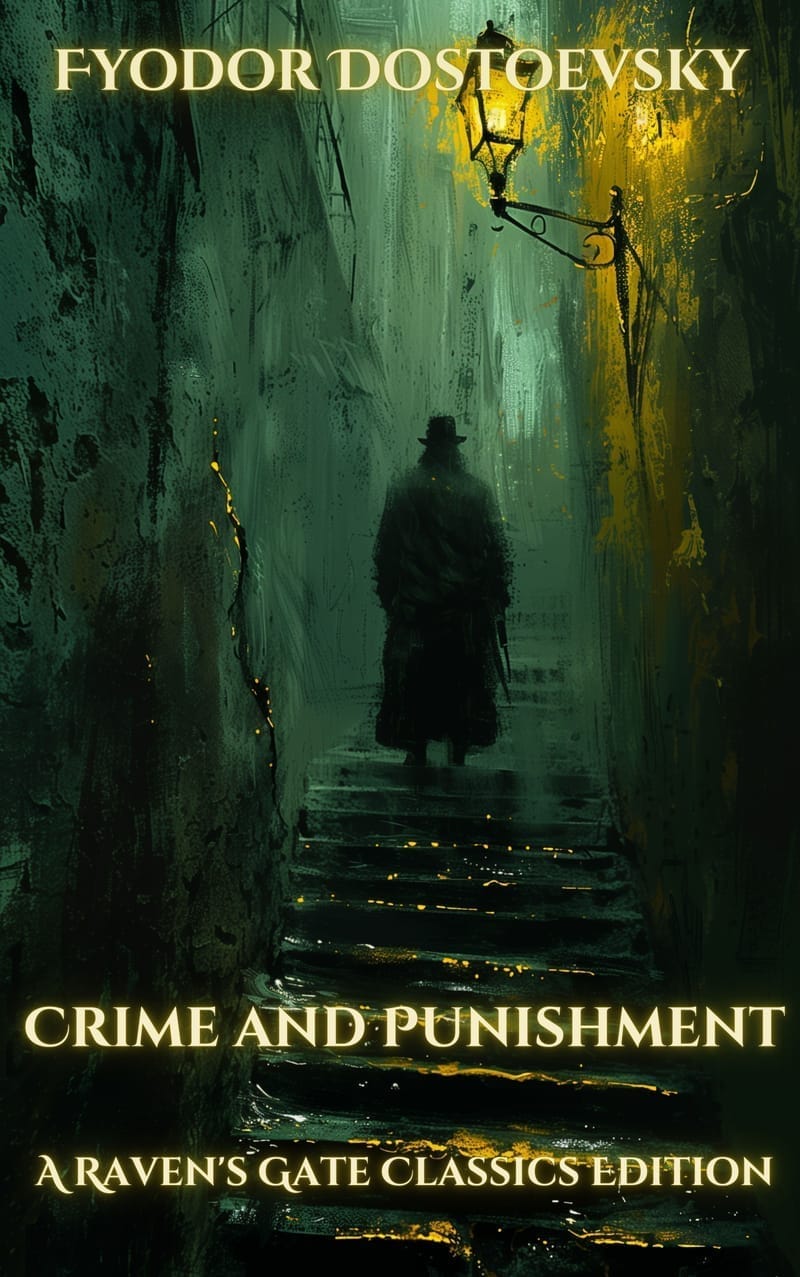
Crime and Punishment (Annotated): A Raven's Gate Classics Edition
by Raven's Gate Classics · Classic Horror Reimagined
A student with an axe and a theory. The theory says some men are extraordinary, above the law, permitted to kill if the killing serves a higher purpose. The axe says he is about to test it.
Crime and Punishment is the greatest psychological novel ever written. Dostoevsky does something no novelist had done before and few have managed since: he puts you inside the mind of a murderer and makes you understand. Not sympathize. Not forgive. Understand. Raskolnikov kills a pawnbroker in Part One. The remaining five parts are the disintegration of a man who thought he was Napoleon and discovered he was not.
This is not a whodunit. You know who did it. You know why. What Dostoevsky is interested in is what happens to a mind that has crossed a line it cannot uncross. Raskolnikov sweats, hallucinates, confesses to strangers, picks fights he cannot win, and collapses into fever. The detective Porfiry doesn't need evidence. He has conversations. They are the most terrifying interrogation scenes in fiction because Porfiry never raises his voice and Raskolnikov cannot stop talking.
And then there is Sonya. A woman forced into prostitution to feed her family, who reads the Gospel of Lazarus to a murderer and tells him he can come back from the dead. Dostoevsky believed she was right. Whether you do is the question the novel leaves with you.
This Raven's Gate Classics edition includes the complete, unaltered text of all six parts and the epilogue in the Constance Garnett translation. A biography of Fyodor Dostoevsky covers the military engineering school, the early literary success, the arrest for involvement with the Petrashevsky Circle, the mock execution that broke something in him permanently, four years in a Siberian prison camp, the epilepsy, the compulsive gambling that devoured his advances, the writing of Crime and Punishment under crushing deadline pressure while simultaneously serializing The Gambler, and the late masterworks.
Commentary covers Raskolnikov's theory of the extraordinary man and where Dostoevsky found it, Porfiry as the detective who solves a crime through psychology rather than evidence, Sonya and the novel's argument about redemption, the St. Petersburg that Dostoevsky mapped with obsessive precision, and why this novel invented the psychological thriller. Curated further reading is included.
No summaries. No study questions. No academic gatekeeping. Just the novel that invented the psychological thriller, in the translation that brought Dostoevsky to the English-speaking world, with the context to understand the man who wrote it coming off a mock execution and a Siberian prison.
More by Raven's Gate Classics

Carmilla
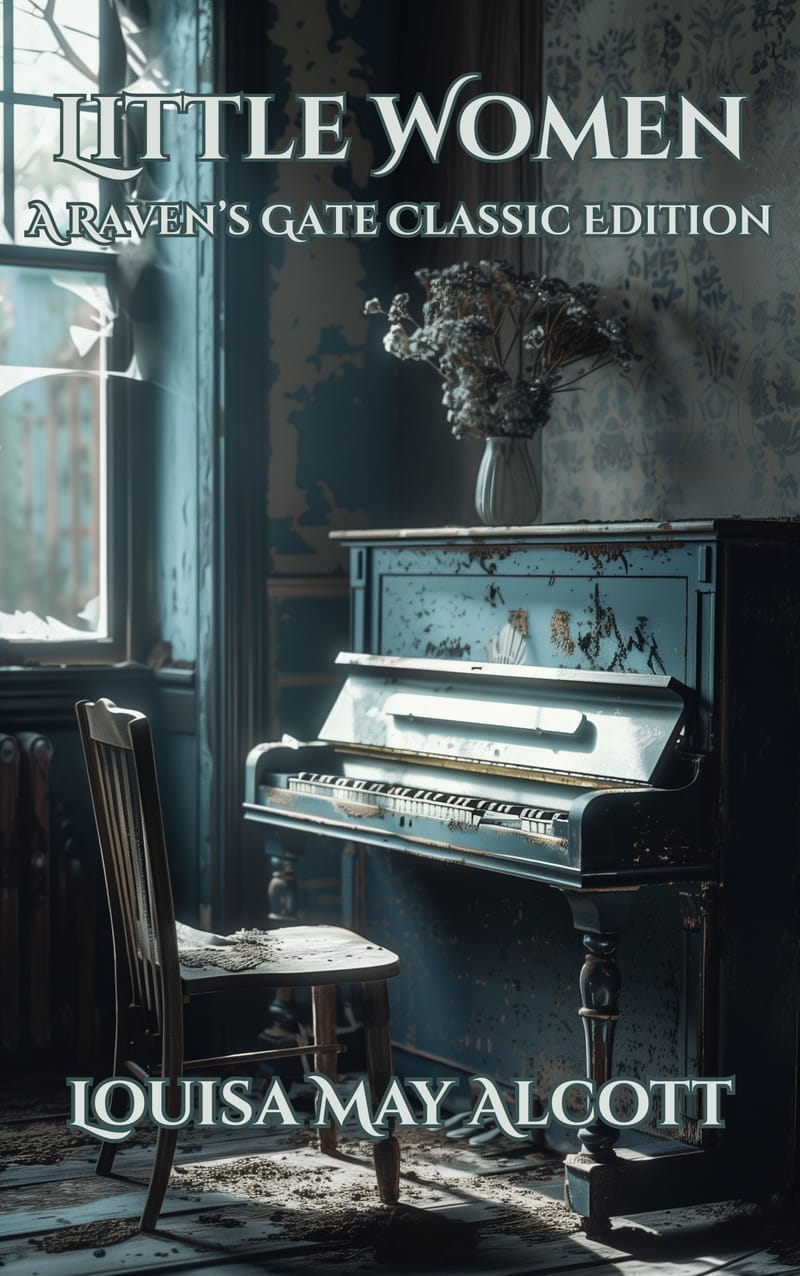
Little Women (Annotated): A Raven's Gate Classics Edition

The Jungle Book (Annotated): A Raven's Gate Classics Edition
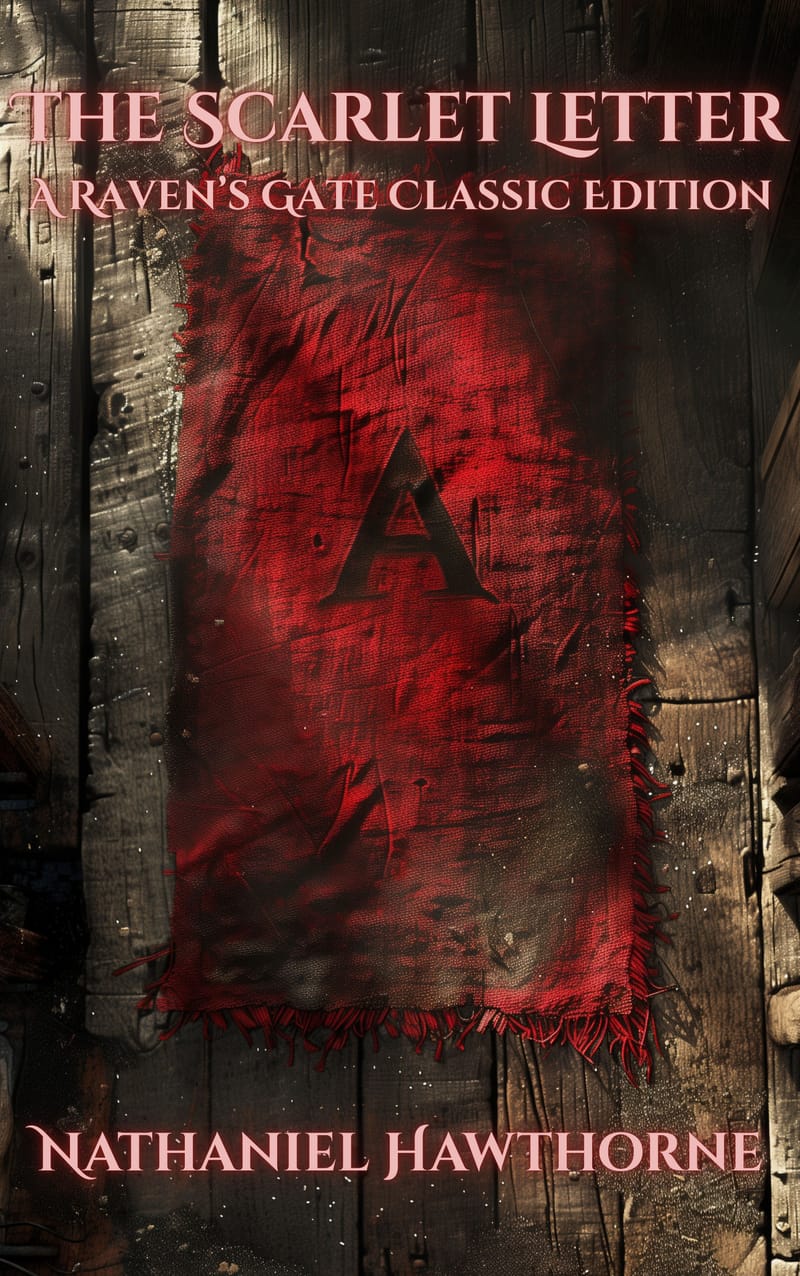
The Scarlet Letter (Annotated): A Raven's Gate Classics Edition

The Second Jungle Book (Annotated): A Raven's Gate Classics Edition

Jane Eyre (Annotated): A Raven's Gate Classics Edition